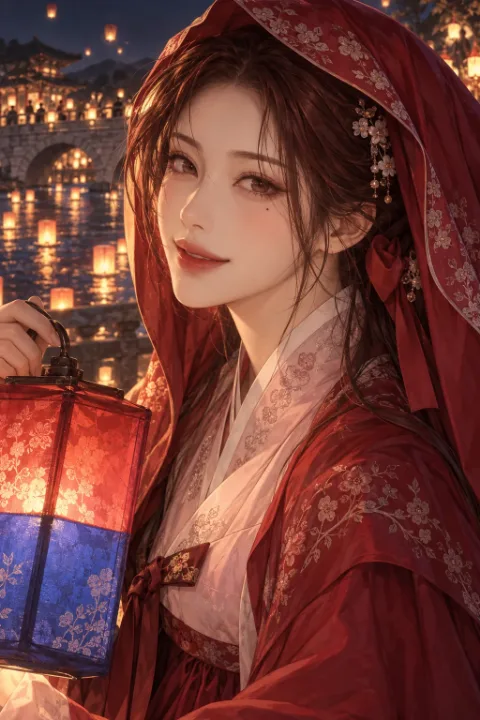
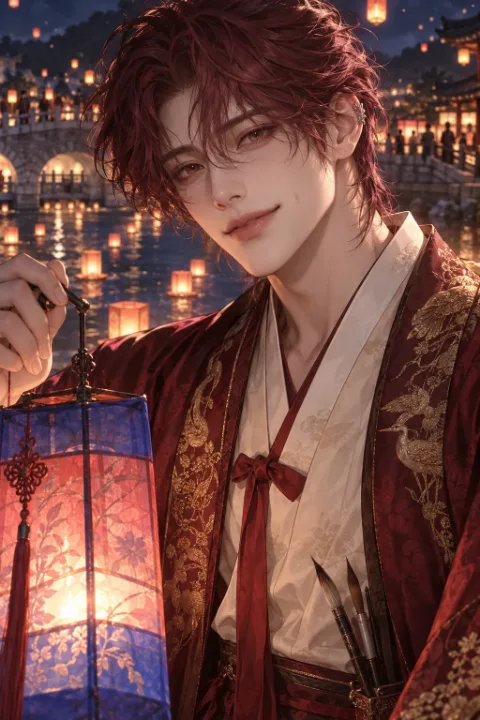
The Red String of Fate in Korea (인연): Meaning, Legend and Saju
An invisible red string ties you to the people you are meant to meet. It is one of East Asia's best-loved love legends, and in Korea it lives inside a single everyday word: inyeon (인연). Here is where the story comes from, what Koreans mean by it, and how it connects to saju.
What Is the Red String of Fate?
The legend says an old matchmaker god ties an invisible red cord between two people who are destined to meet. The cord can stretch across any distance, twist and tangle through the years, but it never breaks.
The story comes from a Tang-dynasty Chinese tale about the Old Man under the Moon, who reads a book of marriages by moonlight and carries a bag of red cords. Koreans know him as Wolha Noin (월하노인).
What Does Inyeon (인연) Mean in Korean?
Inyeon (인연, 因緣) is the Korean word for the bond that brings people together. It has Buddhist roots: in (因) is a cause and yeon (緣) is the condition that lets it bloom, so a meeting is never pure chance.
Koreans use it all the time. A popular saying goes, "Even brushing sleeves is inyeon" (옷깃만 스쳐도 인연) — every encounter, however small, is a thread. A perfect match is cheonsaeng yeonbun (천생연분), a bond made in heaven. Our name, Inyun, comes from this word.
Who waits at the end of your red thread?
Enter your birthday and your saju chart casts your own Joseon K-drama — you, your destined one and your rival. No sign-up.
Pinky Finger or Ankle?
In the old Chinese tale the cord is tied around the ankles. The pinky-finger version became famous through Japanese folklore and later through anime, manga and K-dramas, which often show the thread on a finger or wrist.
Whichever version you picture, the meaning is the same: the bond is already there before you notice it.
The Red String and Korean Saju
Saju (사주) reads the four pillars of your birth — year, month, day and hour — and the balance of the five elements in them. It describes your tendencies and timing themes. It does not name a specific person or decide what anyone else will feel or do.
What saju does have is gunghap (궁합): comparing two charts to see how two people's elements support or challenge each other. Many Koreans check it for fun before a big step, the way others compare zodiac signs.
A classic saju idea is that you are often drawn to the element your chart lacks — what balances you. That is a lovely way to think about the red string: the thread pulls you toward what makes you whole.
Find the End of Your Own Thread (Free)
We turned that idea into a short Joseon K-drama. Enter your birthday and your saju chart casts the story: your day of birth decides who you play, and the element your chart needs most decides your destined one — a royal physician, a hidden prince, a merchant heir, a guard captain or a secret royal inspector.
Episode 1 is free, takes about four minutes and needs no sign-up. It is a story for fun and reflection, cast from a real saju calculation.
Who waits at the end of your red thread?
Enter your birthday and your saju chart casts your own Joseon K-drama — you, your destined one and your rival. No sign-up.
Questions people ask
Is the red string of fate a Korean or Chinese legend?
It began as a Tang-dynasty Chinese tale about the Old Man under the Moon (월하노인 in Korean). Korea, Japan and other East Asian cultures took it in, and in Korea the idea lives in the word inyeon (인연), the bond that connects people.
Can the red string break?
In the legend, no. The string can stretch and tangle but never breaks. Stories often use that tension — distance, timing or a rival — to make the meeting more dramatic.
Which finger is the red string tied to?
The original tale ties it around the ankles. The pinky-finger version comes from Japanese folklore and is the one most people know from anime, manga and K-dramas.
Can saju tell me who I will marry?
No. Saju describes your own tendencies, relationship style and timing themes, and gunghap compares two charts. It never decides another person's choices. Our K-drama uses your chart to cast a fictional story for fun.
What is the difference between inyeon and yeonbun?
Inyeon (인연) is any meaningful connection between people. Yeonbun (연분) leans toward a romantic, destined match, as in cheonsaeng yeonbun (천생연분), a match made in heaven.
More guides
Read your whole chart
Your day pillar is one of eight characters. See all four pillars, your five elements and your 2027 — the first chapters are free.