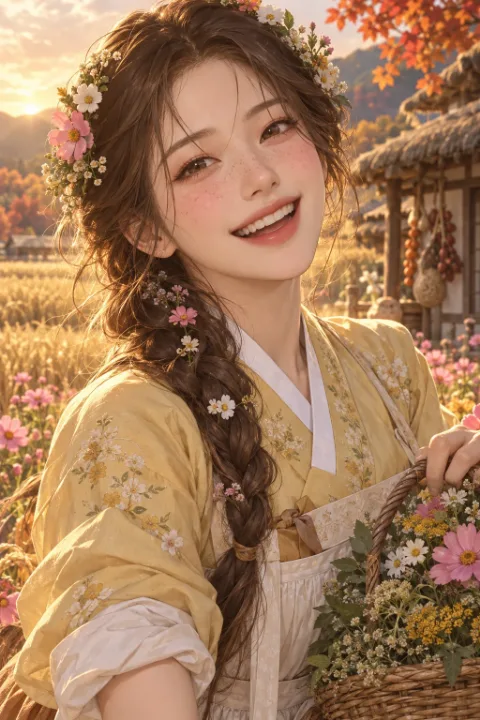
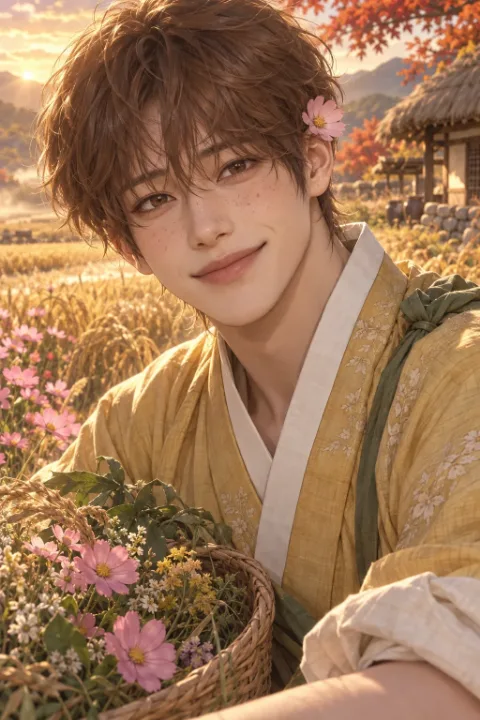
The Yin Earth Rooster Day Pillar — 己酉 Ji You (기유)
In Korean saju, every person has a Day Pillar made of a heavenly stem and an earthly branch, and this pairing is believed to describe your core self. The 己酉 Gi-yu pillar pairs Yin Earth with the Rooster branch, earning it the nickname Yellow Rooster. About one in sixty people share this exact Day Pillar.
What This Pillar Is Like
Saju uses ten heavenly stems and twelve earthly branches, combined into sixty unique pairs called pillars. The stem 己 is called the Garden, a soft and fertile type of Earth that is different from a mountain or a wide field. Garden Earth exists to grow things. It holds moisture, nutrients, and care, and it quietly supports whatever is planted in it.
The branch 酉 is the Rooster, which belongs to the Metal element. Picture a Rooster standing proudly in a well-tended garden bed. The soft earth feeds the Metal, since in the five-element cycle Earth produces Metal. This makes Gi-yu a giving, expressive pillar: the stem is always pouring its energy outward into the branch beneath it, like a gardener who never stops tending the plot.
Personality and Inner World
People with this Day Pillar often show the practical, caring side of Garden Earth. They tend to notice small details other people miss, whether that is a messy desk, an unfinished task, or a friend who seems a little off that day. This attentiveness usually comes from genuine care rather than control.
The Rooster branch is known in saju as a peach-blossom branch, a term used for a handful of branches linked to charm, visibility, and social magnetism. This does not mean romance alone. It means these individuals often carry a natural, eye-catching presence in a room, a certain polish or sociability that draws attention without them trying hard.
There is also a quieter layer underneath. The hidden stem inside the Rooster branch is 辛, a refined and precise form of Metal. This suggests that beneath the warm, sociable surface there can be a sharper, more exacting standard that these people hold for themselves and their work.
Is this your Day Master?
Enter your birthday and meet your character among the Twenty — calculated with true solar time at your birthplace.
In Love and Close Relationships
In saju, the branch directly under the Day Master is called the spouse palace, and it is traditionally read as a hint about the general flavor of one's close partnerships. For Gi-yu, this palace holds the Eating God, a symbol linked to ease, creativity, generosity, and the simple enjoyment of skill and pleasure.
This tends to describe relationships that feel comfortable, warm, and low on tension, where sharing food, hobbies, or creative projects together comes naturally. The caution that often comes with this placement is a pull toward too much comfort, where it can be easy to relax into routine and lose a bit of the spark or ambition that once drove the connection.
Because the Rooster is a peach-blossom branch, people with this pillar are often described as easy to be drawn to and comfortable in social or romantic settings. These are broad tendencies from the Day Pillar alone, not a forecast of what any relationship will become, since a full saju reading always looks at the whole chart together.
Work, Money, and Growth
The twelve life stages describe how much strength a stem has in each branch, almost like describing a season of life. For 己 sitting on 酉, the stage is Birth, meaning fresh starts, being nurtured, and a sense of new growth rather than a long struggle. People with this stage often do well when they get to begin things, learn new skills, and be supported while they grow.
Combined with the Eating God in the spouse palace, this points toward work that involves making, teaching, cooking, designing, caring for others, or any field where skill and output are valued and enjoyed. The giving nature of Earth feeding Metal suggests steady, practical effort rather than flashy risk-taking.
This particular pillar carries no special day-pillar star of its own, such as the markers that sometimes signal unusually strong leadership drive or combative energy. That absence simply means the pillar's character comes mainly from the stem, branch, and hidden stem described here, without an extra layer added on top.
Tips for People Born on This Pillar
Since comfort and ease come naturally here, it can help to set small deadlines or goals so that relaxed energy turns into finished work rather than things left half done. Using that attention to detail on purpose, instead of only when something catches the eye, can turn a quiet strength into a reliable habit.
Because the Rooster branch draws social attention, it can be worth pausing occasionally to check whether time and energy are going toward people and projects that actually matter, rather than just where the spotlight happens to fall. Leaning into the Birth stage by staying curious and open to learning, even later in life, tends to suit this pillar well.
Questions people ask
What does 己酉 Gi-yu (기유) Day Pillar mean?
It means your Day Master is Yin Earth, nicknamed the Garden, sitting on the Rooster branch, which is Metal. This combination is called the Yellow Rooster and is read as a warm, detail-caring, sociable pillar.
Is 己酉 a good or lucky pillar?
Saju does not label any pillar as simply good or bad luck. It describes tendencies, such as this pillar's ease, creativity, and social charm, alongside things to watch, like becoming too comfortable, rather than predicting fate.
What is this pillar's compatibility like?
The spouse palace tendencies suggest comfortable, low-tension relationships built around shared enjoyment, but true compatibility in saju always depends on the full charts of both people, not the Day Pillar alone.
How can I find my own Day Pillar or Day Master?
You can find it free on this site by entering your birth date, time, and place. The site converts your birth time to local solar time at your birthplace to calculate your pillars accurately.
When does the Yin Earth Rooster day come around?
Day pillars repeat every 60 days. The next Yin Earth Rooster days are: Tue, Dec 1, 2026 · Sat, Jan 30, 2027 · Wed, Mar 31, 2027 · Sun, May 30, 2027 · Thu, Jul 29, 2027 · Mon, Sep 27, 2027. People born on this pillar often notice these days feel familiar.
Pillars that pair and contrast
Natural partner: 甲辰 Yang Wood Dragon — its stem combines with 己 and its branch forms a six-harmony pair with 酉, a classic sign of easy cooperation.
Real compatibility reads both full charts — check two birthdays.
Neighbouring pillars
Read your whole chart
Your day pillar is one of eight characters. See all four pillars, your five elements and your 2027 — the first chapters are free.